The Courage to Speak Up: Mahlah, Noah, Hoglah, Milkah and Tirzah
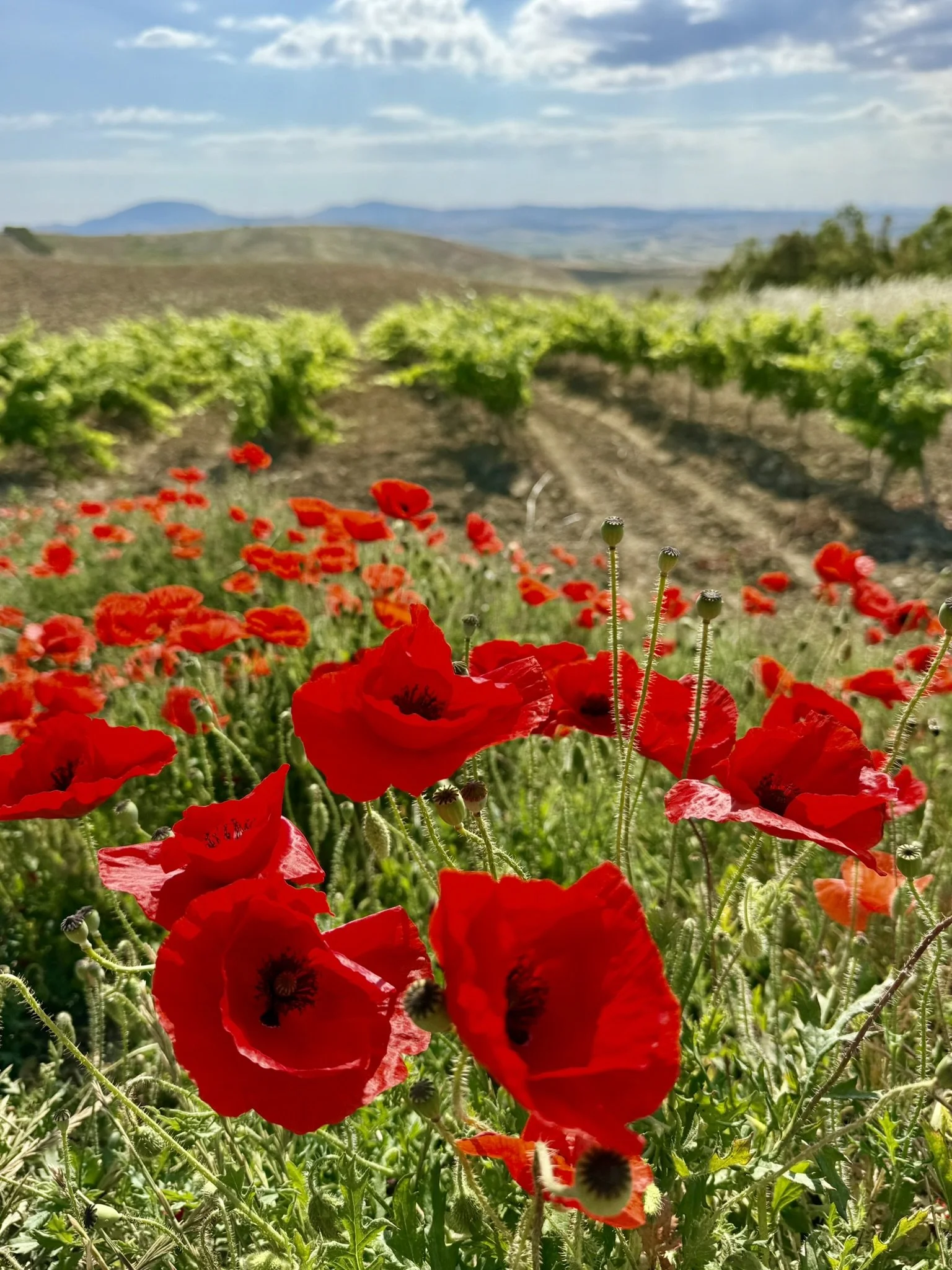
Bold.
Advocates for what was right but was not usually done in a patriarchal culture.
Their challenge flies in the face of what was expected.
The request is profoundly public.
It would have been easy to be intimidated.
The context: The Hebrew people had been slaves in Egypt for over 400 years. As freed people, they have no land, no property to call their own. They have been making new tracks—for decades—in the wilderness. Now, they are learning what their Promised Land territory assignment will be.
The Lord tells Moses and Eleazar (Aaron’s son, a priest) to take a census of the whole Israelite community by families and to count the men age twenty and older for military service (Numbers 26:1-4). God goes on to say that “The land is to be allotted to [the clans] as an inheritance based on the number of names. To a larger group give a larger inheritance, and to a smaller group a smaller one; each is to receive its inheritance according to the number of those listed. Be sure that the land is distributed by lot. What each group inherits will be according to the names for its ancestral tribe. Each inheritance is to be distributed by lot among the larger and smaller groups” (Numbers 26:52-56).
Mahlah, Noah, Hoglah, Milkah and Tirzah, due to the death of their father and no brother as heir-apparent, will have no land inheritance when they and their people cross the Jordan. They come before Moses, Eleazar, the rest of the leaders, and the whole assembly of the people at the entrance to the holiest place they knew besides the Tabernacle—the tent of meeting. This was the place where anyone who had a prayer request (a question or entreaty) for God could come. This was also where disputes were settled.
[Mahlah, Noah, Hoglah, Milkah and Tirzah] said, “Our father died in the wilderness. He was not among Korah’s followers, who banded together against the Lord, but he died for his own sin and left no sons. Why should our father’s name disappear from his clan because he had no son? Give us property among our father’s relatives.”
Moses does not decide the issue himself, based on what he knows or thinks he knows. He brings it before God. And, God takes the side of Mahlah, Noah, Hoglah, Milkah and Tirzah. They are right—they should have property—their father’s inheritance. And, furthermore, the Lord makes a decree that this should set a precedent going forward—daughters should inherit their father’s land if there is no son.
So Moses brought their case before the Lord, and the Lord said to him, “What Zelophehad’s daughters are saying is right. You must certainly give them property as an inheritance among their father’s relatives and give their father’s inheritance to them.
“Say to the Israelites, ‘If a man dies and leaves no son, give his inheritance to his daughter. Numbers 27:1-8
The faithfulness of daughters of Zelophehad resulted in fairness and inclusion for themselves and their offspring—a generational benefit—as well as for future generations of daughters. This one moment of holy confidence changes everything.
Calling sometimes looks like challenging the status quo. Mahlah, Noah, Hoglah, Milkah and Tirzah stepped forward to advocate for justice when they were overlooked, and God not only affirmed their request but expanded its impact. Their story reminds us that purpose is not always quiet—it can require courage to speak when something is wrong…when you and/or others are being passed over or disregarded. Faithfulness includes trusting that God sees and responds, even when you are the first to raise your voice.
Reflect:
· Is the Lord nudging you to be bold in asking for what is right—for yourself or for someone else?
· What is stopping or intimidating you?
· How might you approach the person in charge/in power to make your request?
· Can you see the potential ripple effect of your appeal if it is successful?
· Take time to ask God to give you the words, the timing, the courage, and the favor in this situation.
Important resources:
Take this free spiritual gifts assessment or this free Spanish language spiritual gifts assessment.
Purchase the six-week workbook in English or Spanish:
Downloadable Resources--See Sample List of Interest Areas; Your Spiritual Gifts—A Study Guide; Knowing Your Unique Calling and Purpose Study Guide; Whole-Life Ministry: A Form of Worship, Grace-Giving, and Living into Your Calling.
Shirley Giles Davis, author of God's Affirmations For You: A Book of Encouragement—A 12-Week Devotional Practice, the God. Gifts. You. Your Unique Calling and Design workbook, Your Unique Design Class Guide, Your Unique Design Facilitator Guide, DIOS. DONES. TÚ.: Tu llamado y diseño único (Spanish Edition), and Gifts-Calling-Purpose blog, is a consultant, coach, facilitator who has worked with hundreds of faith-based organizations, nonprofit agencies, and executive leaders in a diversity of fields for four decades. She currently serves as Catalyst for Equipping at her church.
Photo © Dr. Grace Helen Davis.
All rights reserved.
Additionally, the contents of these blog posts may not be used to train generative artificial intelligence (AI) technologies without the author's express permission